A Record-Shop Listening Trail Through Southern Music
A Southern music record-shop listening trail helps you hear regional song forms, instruments, and performance details in an unfamiliar local release.
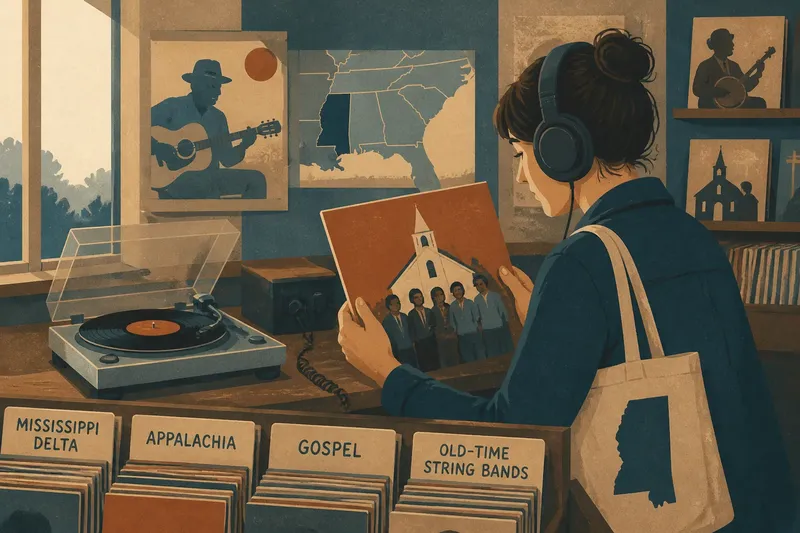
A Southern music record-shop listening trail can turn one unfamiliar record into a closer encounter with its songs, instruments, and performance setting. Start with a release connected to a place or tradition you want to hear, then listen for one detail at a time instead of trying to identify everything at once.
In a shop’s local section, a sleeve might point toward a gospel quartet, a country string band, or a blues performance. Those labels offer a starting place, not a complete account of the music. Bring headphones for the listening station, if the shop has one, and let the sound itself guide your questions.
Choose a regional thread
Begin with a place, community, or musical tradition rather than a broad label. You might look for a release associated with the Mississippi Delta, the Appalachian South, a coastal community, or a church congregation. A town name, label address, or artist biography can help you find a thread to follow.
Ask a shopkeeper for a local recording with a clear connection to that thread, or browse the sections organized by state, label, or style. Keep the request open: “I’m curious about gospel harmony from this area” gives the staff room to suggest a sound without treating a region as musically uniform.
Pick one release
Choose a record you do not already know. A striking cover or familiar place name can catch your eye, but check the artist and track list before deciding. A single or short collection can suit a quick visit; an album gives you more room to hear how songs and arrangements sit together.
If the shop has a listening station, ask how sampling works before you put on headphones. If not, make a note of the artist and label so you can look for the release through a library or a legitimate streaming service later.
Read the sleeve closely
Look for artist names, song titles, instrument credits, label information, and recording notes. A sleeve may name a church, dance hall, home studio, or town. Use that detail to guide your listening, but do not assume it describes every sound on the record.
Notice the words the sleeve uses, too. “Traditional,” “old-time,” or “gospel” may refer to a song’s roots, its arrangement, or a broad category. If the wording is vague, let the performance supply the detail the label cannot.
Listen for song form
Start with the opening of one track. Does a voice begin alone, do instruments establish a pulse first, or does the whole group enter together? Then listen for recurring sections: a verse followed by a refrain, a repeated chorus, a call-and-response passage, or an instrumental break.
Southern song forms vary widely, even within a single tradition. Rather than forcing a label onto every section, note what repeats and what changes. “The chorus returns after each verse” is useful; so is “the singer leaves a space for the group to answer.”
Follow an instrument
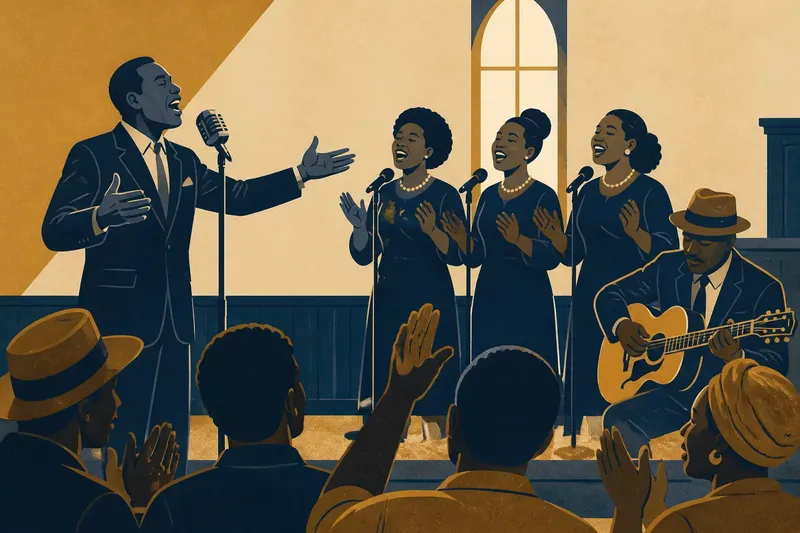
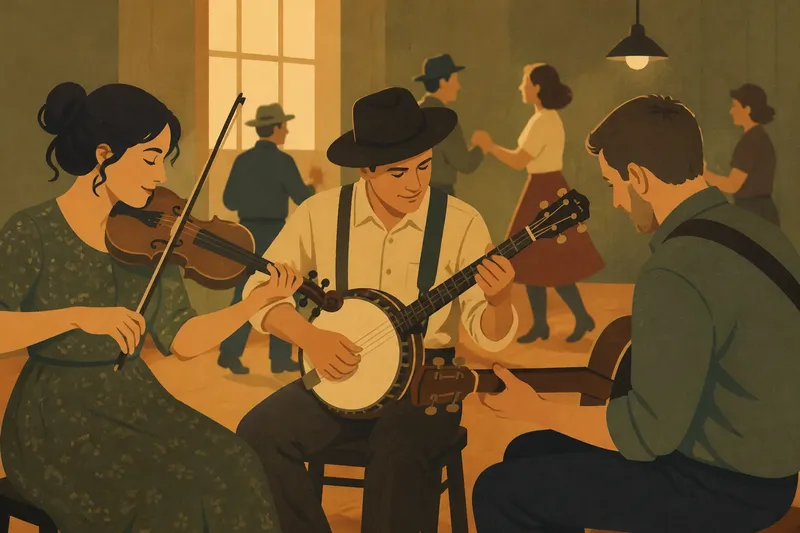
Choose one sound and track its role through a passage. In a string-band recording, you might follow a fiddle line that answers the singer; in a blues track, listen for a guitar phrase between vocal lines; in a gospel performance, notice how piano or handclaps support the choir. These are listening possibilities, not rules about what any style must contain.
If you cannot name an instrument, describe its character and timing instead: a bright sound after each line, a low pulse beneath the voice, or a scrape that grows sharper in the chorus. Check the credits afterward if they are available, and keep your original description if the instrument remains uncertain.
Notice the performance setting
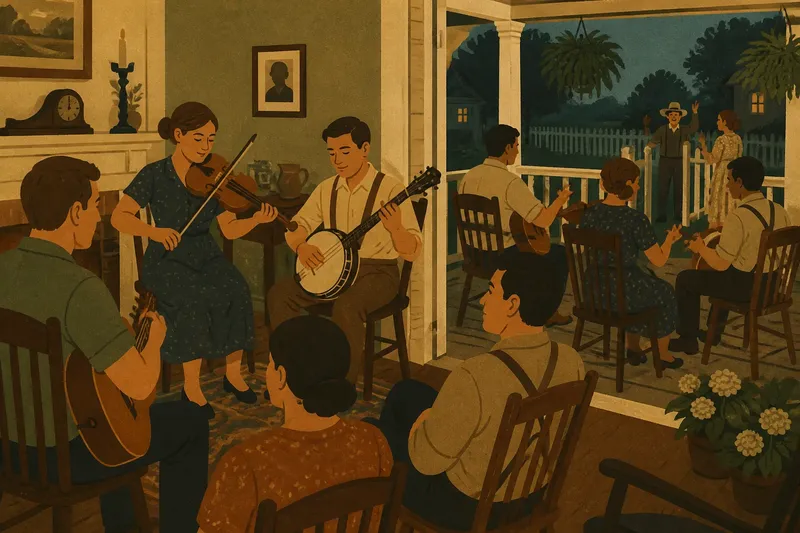
Listen for how the performers relate to one another. A lead singer may leave space for a choir, a caller may cue a group response, or instrumentalists may trade short phrases. Audience noise, room echo, or spoken introductions can suggest a live setting, but the recording alone may not establish where it was made.
Keep the distinction between sound and certainty clear. “The voices seem close together, and I hear a brief audience response” describes what reaches your ears. Naming a specific church or venue requires supporting information from the sleeve or another reliable source.
Compare two tracks
After one attentive listen, choose a second track on the same release. Carry one question forward: does the singer phrase the melody differently, does the instrument take a new role, or does the arrangement make more room for group vocals? Comparing tracks helps you hear both a record’s recurring character and its shifts.
Imagine you pick a hypothetical gospel collection whose sleeve names a small-town church and credits piano and group vocals. On the first track, you hear a solo lead followed by a choir response; on the next, you notice the piano setting a steadier pulse while the group sings together. The resulting comparison is specific—call-and-response on one track, a more continuous group vocal on the other—without claiming that either track represents all gospel music from that town.
Questions about listening?
What should I search for in a Southern music record?
Try a place name, local label, artist, or tradition such as gospel, blues, or old-time string-band music. Treat each result as a particular recording rather than a stand-in for an entire region.
How can I tell whether a recording is live?
Listen for audience reactions, spoken introductions, and room sound, then check the sleeve for recording notes. If those clues are absent or unclear, describe the sound without assigning it a venue.
What if I cannot identify an instrument?
Describe its pitch, texture, and place in the arrangement, such as “a high, sustained sound between vocal lines.” If the sleeve lists instruments, replay the passage with that credit in mind; if it does not, leave the identification open.
Keep a listening note
Write down the artist, release title, one detail about the song form, and one sound you want to hear again. A short note such as “refrain after each verse; fiddle answers the lead voice” makes it easier to ask a shopkeeper for a related release without reducing your request to a broad genre.
A Southern music record-shop listening trail works best when the next stop grows from something you actually heard. Follow a vocal exchange, a recurring instrument, or a change in the song’s structure, and you can move from one local release to another with a sharper question and a more attentive ear.