From Parlour to Porch: Informal Music Making in the South
Informal music making in the South shifts with its setting. Follow an imagined gathering from a crowded parlour to an open porch and hear what changes.
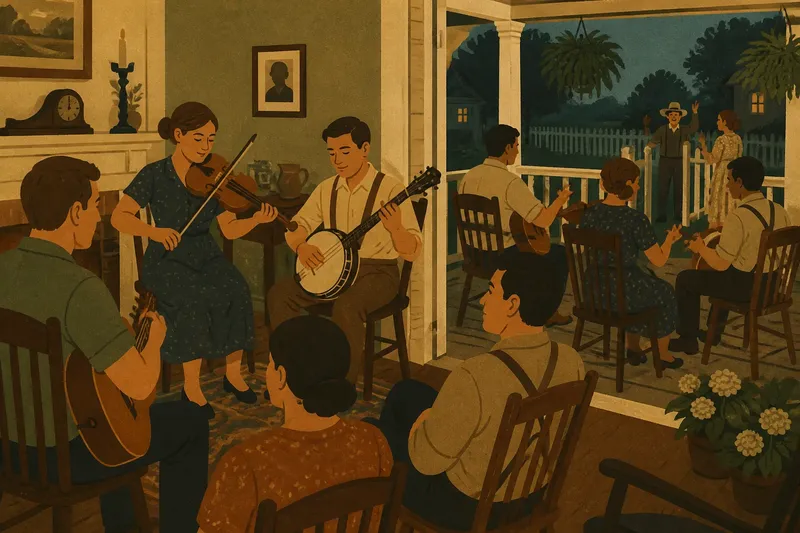
Informal music making in the South changes as players carry a tune from a parlour to a porch: the sound spreads, the audience shifts, and the room for joining in changes with it. Imagine a family gathering in an invented small-town home, where relatives bring instruments into the front room before moving outside as neighbors arrive. The evening offers a close look at how setting shapes a performance without standing in for every Southern tradition.
Parlour arrangements
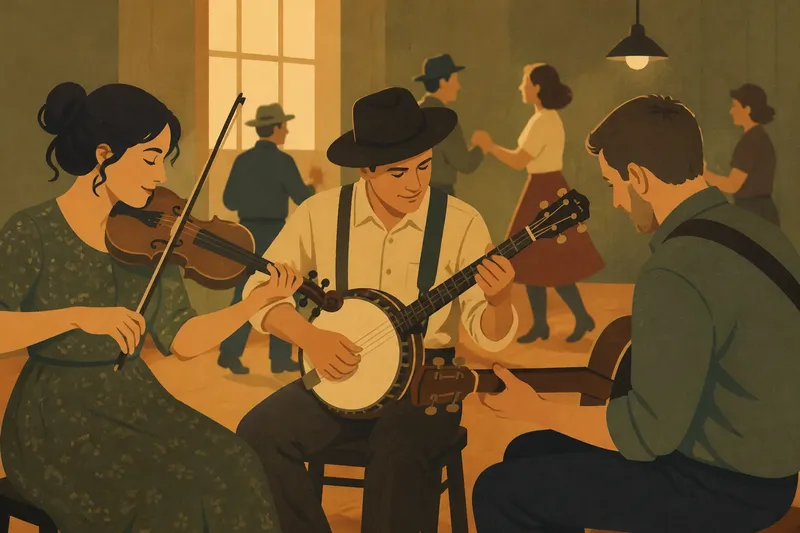
In this imagined house, a few players settle into the parlour after supper. One has a fiddle, another a banjo, and a third keeps time on guitar. These are choices for this invented scene, not a template: a home gathering might include different instruments, or voices alone.
Chairs form a loose circle, with a path left clear between the doorway and the hearth. The fiddle player has room to bow; the singer can face the listeners. People who do not play can sit at the edge, offer a verse, or keep time with a hand on a chair.
Furniture gives the music a center without turning the room into a formal stage. A tune begins, attention gathers, and the parlour briefly serves as a performance space within ordinary domestic life.
Local traditions
Informal music making has no single founding room, community, or instrument. People have sung and played in homes and outdoor spaces for different reasons and under different conditions. A parlour gathering can suggest one kind of domestic music making; it cannot represent every Southern household or tradition.
“Parlour” can also imply a uniform setting that never existed. Homes and social customs vary by place, community, means, and era. One household might gather around a piano; another might center its music on voices and portable instruments. The useful question is how a particular space lets people make music together, not whether it fits a single historical pattern.
Memory shapes these gatherings, too. One family might recall a tune from reunions, while a neighbor remembers learning songs by listening. Such recollections describe particular relationships with music; they need not explain where a broader practice began.
Joining the circle
In the invented gathering, a cousin who knows only part of a song sits near the doorway. When the players repeat a familiar verse, the cousin joins on a recognized line. The group makes room for participation by choosing music someone present can enter.
Listening, watching a player’s hands, singing along, and asking to hear a tune again can all be ways to learn. Yet informal does not automatically mean welcoming. A group may make space for mistakes, or it may favor people who already know its repertoire and customs.
A player can leave a verse open for another voice, explain a tune’s name, or make room for someone who wants to keep time. These gestures do not turn a gathering into a class; they make its boundaries easier to see and, if the group chooses, easier to cross.
Moving outdoors
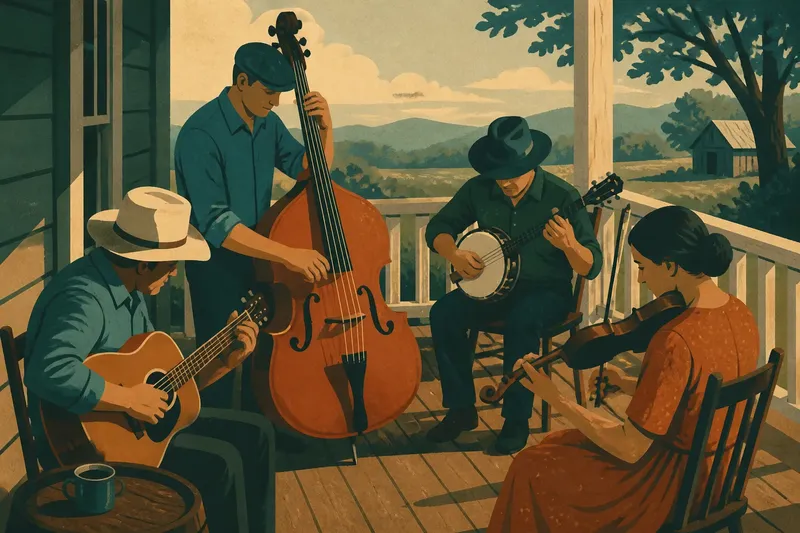
As more neighbors arrive in the imagined scene, the parlour feels crowded. The players carry chairs and instruments onto the porch, where music meets conversation, foot traffic, and open air. People can stand or drift away, and the gathering’s edge becomes less distinct.
Indoors, walls keep sound close to the players. Outside, voices and instruments share space with neighborhood noise. A singer may project more, a quiet instrument may become harder to hear, and someone in the yard may catch only the strongest parts. The players might simplify a passage, pause between tunes, or bring their chairs closer together.
A porch can let a visitor listen from the steps or path without entering the house, but it remains part of a home. The people gathered there decide how open the evening feels. Its threshold can make the audience more flexible without making the music public by default.
In this invented scene, a neighbor calls a greeting from the gate and stays to listen. The players turn their chairs toward the yard and repeat a tune. The newcomer can hear its shape, while the gathering keeps its informal character.
Room and porch?
Why move music outdoors?
A porch can ease crowding and let people come and go without entering the house. It can also bring interruptions and make the sound less contained, so the move depends on the gathering’s circumstances.
Does informal mean unplanned?
No. Players may know what they want to sing, take turns choosing tunes, or leave room for a particular voice. “Informal” describes the social setting, not a lack of skill or shared expectations.
How can a newcomer join?
Listen for a repeating song or a pause, then ask before joining if the gathering seems private or the tune has an established arrangement. A quiet invitation can be clearer than assuming that every listener is welcome to play.
What changes from room to porch?
Sound, movement, and access shift together. A room draws listeners into a contained circle; a porch lets them spread out, while players may adjust their volume, spacing, or song choice.
Listening to place
The setting is more than scenery. Notice where players sit, who stands at the edges, and whether music pauses for conversation or carries on through it. Those details show who can hear, who seems comfortable contributing, and what kind of attention the space allows.
As the music moves outdoors, listen for what changes. Does the group keep the tune but alter its volume? Does a singer stand out as the instrumental sound spreads? Does the pace loosen as people come and go? These are observations about a particular performance, not rules for every room or porch.
Distinguish the music itself from the conditions around it. A tune can travel with the players while its balance, audience, and social role shift. Sung among relatives indoors, it might feel like shared memory; heard by neighbors on a porch, it might sound like an invitation—or simply carry into the evening.
A worked evening
Imagine a gathering that starts with three players in a parlour: a fiddler, a banjo player, and a guitarist. The room grows crowded as two neighbors arrive, so the host asks whether the group would like to move outside. The players carry their chairs and instruments onto the porch, then notice that conversation from the yard makes the fiddle difficult to hear.
They respond by drawing the chairs closer and choosing a tune with a repeated phrase. One neighbor recognizes it and joins the refrain; another stays near the gate and listens. The observable result is a looser audience and a song that a newcomer can follow, while the tradeoff is that the porch brings more outside noise. In this invented situation, the players choose participation over a quieter, more contained room.
Small shifts
When you encounter music at a home, community gathering, or outdoor visit, listen for the space’s quiet instructions. A chair pulled closer, a pause that leaves room for another voice, or players turning toward the yard can tell you as much as the tune.
Informal music making in the South takes shape through the relationship among people, repertoire, and place. If the setting changes, watch for what the players adjust—and for who gains a chance to hear or take part.